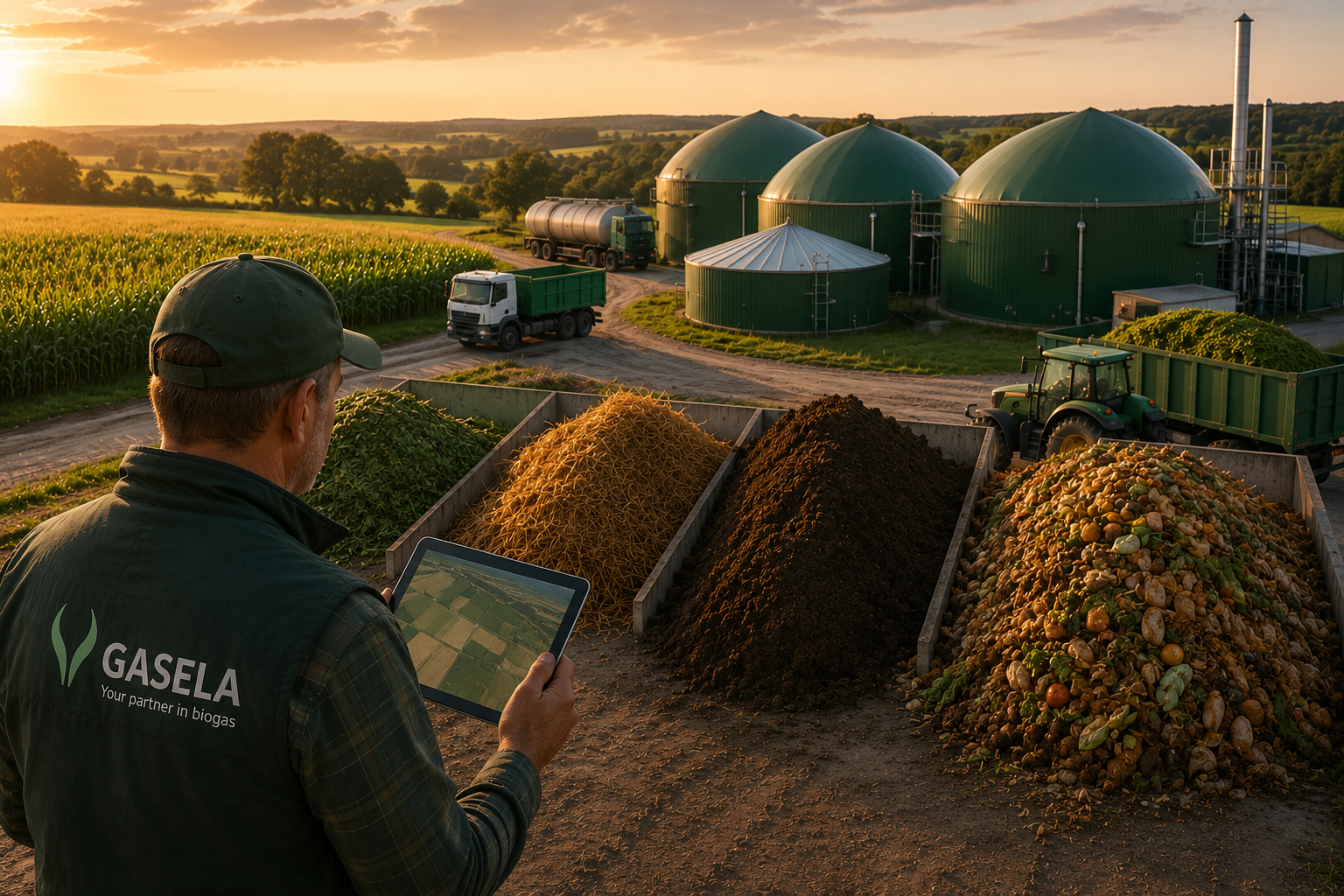
The renewable energy market in Poland is expanding rapidly, and the demand for biogas and biomethane projects continues to grow. Investors are actively seeking ready-made or partially developed installations that can be taken over and completed. If you own a biogas plant project, a biomethane project, or even a fully operational biogas facility, the current market conditions create a strong opportunity for a successful sale.
In this article, we explain when selling your project makes sense, how the acquisition process works, and why cooperating with experienced OZE investors can be highly beneficial.
Why Is the Demand for Biogas and Biomethane Projects Growing?
Biogas and biomethane installations are becoming increasingly attractive for several reasons:
- long-term financial stability and predictable returns,
- growing support from EU and national renewable energy programs,
- increasing demand for green gas injected into the grid,
- expanding opportunities for agricultural waste and byproduct utilization,
- rising interest from both Polish and international investors.
This combination of factors creates a strong market for projects at any development stage—from concept to operation.
What Types of Projects Are Investors Searching For?
Investors are actively purchasing:
- preliminary project concepts,
- projects with environmental and administrative permits underway,
- construction-ready projects,
- facilities in the middle of construction,
- fully operational biogas plants generating revenue.
Each stage has its own investor profile, from private buyers to institutional funds and energy companies.
How the Acquisition Process Works?
1. Initial Project Review
After submitting your project, investors perform a preliminary assessment based on location, access to feedstock, regulatory status, and project maturity.
2. Technical and Legal Due Diligence
This includes a detailed review of:
- administrative decisions and permits,
- technical documentation and engineering assumptions,
- performance and production forecasts,
- environmental impact and regulatory compliance.
3. Proposal of Terms
You receive a tailored offer including:
- the proposed transaction structure,
- settlement model (e.g., milestone-based or full acquisition),
- expected timeline,
- post-transaction cooperation options.
4. Finalization of the Sale
Once mutually agreed, the project is formally transferred to the buyer, who continues its development and implementation.
Flexible Settlement Options
Depending on the project’s maturity, several transaction models are available:
- full acquisition of project rights,
- milestone-based payments,
- hybrid or customized settlement structures.
This flexibility ensures that the seller’s financial expectations align with the actual potential of the project.
Why Selling Your Biogas Project Can Be a Smart Move?
Project owners often choose to sell due to:
- limited capital for further development,
- desire for fast liquidity,
- change in business focus,
- administrative or local barriers,
- attractive market valuation.
By selling to experienced investors, you ensure the project continues to grow while minimizing your own risk and workload.
Looking to Sell Your Biogas or Biomethane Project?
If you own a project—at any stage—reach out to us. We work closely with multiple investors in the renewable energy sector, offering:
- fast decision-making,
- transparent and fair terms,
- flexible settlement models,
- professional valuation based on current market data.
Fill out the contact form on our website, and we’ll get in touch to discuss your project and present a tailored offer.